Considering a gated home in Seven Hills but not sure how the gates, HOAs, and rules actually work day to day? You’re not alone. Buyers love the privacy and amenities here, yet the layers of associations, assessments, and access controls can feel complex. In this guide, you’ll learn how gated communities in Seven Hills operate, what your HOA dues support, and how to do smart due diligence before you buy. Let’s dive in.
Seven Hills at a glance
Seven Hills is a master‑planned hillside area in southern Henderson with scenic Strip and mountain views. You’ll find a mix of gated enclaves and non‑gated streets, plus neighborhoods with shared or private amenities. Some areas are controlled by a master association with additional sub‑HOAs for specific enclaves.
City services still apply. Police, fire, utilities, and trash are provided by the City of Henderson and regional agencies. Gating does not replace municipal services or override city codes.
Gate types you’ll see
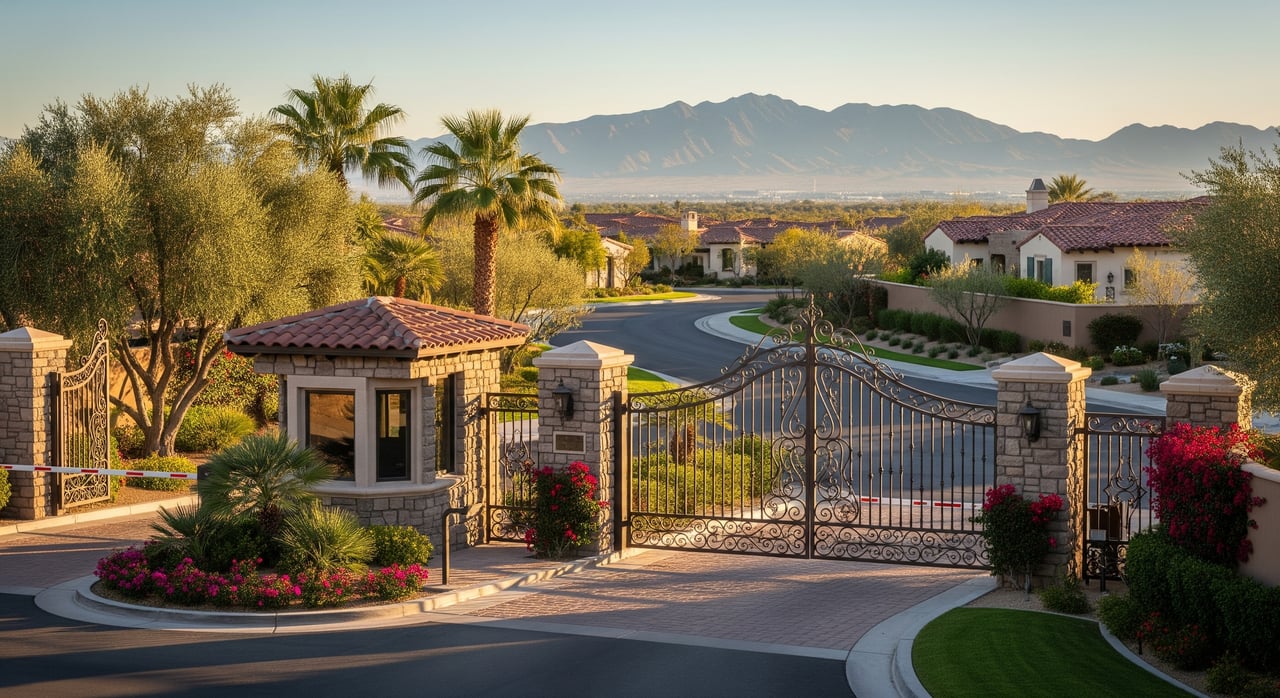
Guard‑staffed gates
Some enclaves use private security to check IDs, log visitors, and enforce guest policies. Staffing may be 24/7 or limited hours. This model offers a higher level of visitor control and typically increases HOA dues because of ongoing personnel costs.
Automated gates
Other streets rely on electronic systems such as key fobs, keypads, intercoms, and license plate recognition. Automated gates reduce ongoing staffing costs but still require maintenance, software updates, and occasional hardware replacement.
Aesthetic deterrent gates
Certain entries are designed primarily to control traffic flow and enhance the streetscape. These rely on public enforcement for security. They help deter cut‑through traffic but should not be viewed as a guarantee of safety.
Master‑gated with sub‑HOAs
In parts of Seven Hills, a master association controls the primary gates and shared landscaping, while sub‑HOAs maintain interior streets and amenities. Each layer has its own rules, budgets, and boards, so you should plan to review multiple sets of documents before closing.
Access and deliveries
Visitor access usually requires a resident‑provided code, intercom approval, or a guest pass. Delivery carriers may have access arrangements or may contact you at the gate. Emergency services should have rapid access to gated areas. Ask how first responders enter and whether there are backup systems for power outages.
HOA governance and Nevada law
Gated living in Seven Hills is governed by the Nevada Common‑Interest Ownership Act (NRS Chapter 116). This statute sets standards for association governance, disclosures, budgets, reserves, meetings, and homeowner rights.
Master HOAs and sub‑HOAs
Many neighborhoods operate under a master association for major common areas and security, with sub‑HOAs governing individual enclaves. Each association has its own CC&Rs, bylaws, and budgets. You should confirm which associations apply to your specific property.
Board and professional management
Elected homeowner boards adopt rules, levy assessments, and contract for services such as gate staffing, landscaping, and insurance. Most associations hire professional management companies to handle accounting, vendor oversight, compliance, and gate system operations.
Money matters: dues, reserves, and assessments
- Regular assessments fund routine maintenance, insurance for common areas, landscaping, security staffing or monitoring, and utilities that serve common elements.
- Reserve funds cover large future projects like gate replacements, pool equipment, and roadway resurfacing. Associations complete reserve studies to estimate these costs.
- Special assessments can occur if reserves are insufficient or unexpected capital work arises. You should ask about any planned projects or historical assessments.
- Resale and transfer fees are common when ownership changes. These fees cover the cost of providing the required HOA documents.
Rules and enforcement
CC&Rs and rules may address architectural standards, exterior materials and colors, landscaping, parking, RV or boat storage, holiday lighting, pets, noise, and rental policies. Associations can issue warnings and fines, place liens for unpaid assessments, and pursue legal action when needed. Rules can change within the limits of the law and the governing documents.
Required disclosures at resale
Nevada requires sellers to provide HOA documents during resale. Buyers typically receive a package that includes CC&Rs, budgets, reserve studies, meeting minutes, and delinquency information. Review these documents before you remove contingencies, and ask for clarification on any planned projects or board resolutions.
Amenities to expect
Gated enclaves in Seven Hills commonly offer:
- Landscaped entries and monuments
- Private pools and spas, fitness rooms, and community rooms or clubhouses
- Tennis or pickleball courts and playgrounds
- Walking trails and green belts
- Pocket parks and dog parks
- Adjacent or nearby golf settings depending on the sub‑neighborhood
- Enhanced streetscapes, including lighting and view corridors
Amenities vary by subdivision. Always confirm what belongs to the master association versus a sub‑HOA and what is included in dues.
Costs and tradeoffs
What drives dues in Seven Hills
Monthly HOA dues vary by neighborhood and by security model. Guard‑staffed gates and higher‑end amenities typically raise operating costs. Automated gates tend to lower personnel expenses but still require ongoing maintenance. Some associations include certain utilities for common areas in the dues.
One‑time resale and transfer fees are typical. Special assessments may be levied for capital projects such as gate system replacements or roadway work if reserves fall short.
Lifestyle benefits
- Privacy and reduced through‑traffic
- Controlled access for guests and vendors
- Uniform neighborhood aesthetics and curated streetscapes
- Shared amenities that can raise day‑to‑day convenience
Considerations to weigh
- Rules on exterior changes, visible personal items, and parking
- Ongoing dues and the potential for special assessments
- Guest and delivery logistics at the gate
- Enforcement actions and possible disputes with boards
Security expectations should be realistic. Gates help deter casual access and opportunistic activity, but no system can eliminate crime. You should review neighborhood lighting, access policies, and local statistics to make an informed decision.
Due diligence checklist for buyers
Request and review these items before you remove contingencies:
- Current CC&Rs, bylaws, rules and regulations, and architectural guidelines
- Current year budget and most recent financial statements
- The most recent reserve study and the association’s reserve funding policy
- Board meeting minutes from the last 6 to 12 months
- Disclosure of litigation involving the HOA
- A list of all recurring dues, transfer/resale fees, and any pending special assessments
- Management agreement and, if applicable, the security/guard contract
- Master insurance declarations and a summary of owner insurance obligations
- Parking, RV/boat, rental restrictions, pet policies, and the architectural review process
Key questions to ask the HOA or management:
- Who maintains the gate, and what are the staffing hours or monitoring model?
- Are capital projects or assessments planned in the next 1 to 3 years?
- What is the reserve fund balance and percent funded compared to the reserve study?
- Is there current or threatened litigation affecting common areas?
- How do guest access, vendor access, and deliveries work on a daily basis?
- Are there rental caps or minimum lease terms that could affect your plans?
- How are CC&R violations enforced, and what is the grievance or appeal process?
- Are there unusual deed restrictions or landscaping obligations you should know about?
- How do emergency services access the gate during power outages or system failures?
On‑site steps to take:
- Visit the gate and amenities at different times of day to observe traffic, noise, and staffing
- Talk with residents, board members, or management about enforcement style and community culture
- Compare HOA rules and fees between similar sub‑neighborhoods
- Verify how irrigation and common‑area utilities are handled, since costs can shift with weather
- If you plan to rent the home, confirm both HOA rules and local ordinances for rentals
Financing and insurance basics
Your lender may review HOA financials, especially for condominium projects. For single‑family homes in HOAs, lenders can still request documents if there are concerns about reserves or assessments. If rental restrictions exist, those can impact investor plans and certain loan products.
The HOA’s master insurance typically covers common areas and certain liabilities. You still need an individual homeowners policy to protect your interior, personal property, and personal liability. Ask how the master deductible applies if a common‑area event affects your home.
Is a Seven Hills gate right for you?
If you value privacy, consistent curb appeal, and shared amenities, a gated enclave in Seven Hills can fit well. You’ll trade some flexibility on exterior changes and pay ongoing dues in exchange for access control and neighborhood standards. The smartest path is to review the documents early, visit in person at varied times, and ask targeted questions about reserves, planned projects, and day‑to‑day gate operations.
If you want help matching your lifestyle and budget to the right Seven Hills enclave, connect with the local team that works these neighborhoods daily. Reach out to Griggs Team Real Estate for guidance, tours, and a smooth path from search to close.
FAQs
Will a gate stop all crime in Seven Hills?
- No. Gates reduce casual access and through‑traffic but do not eliminate crime. You should still review local data, lighting, and surveillance.
Do guard‑gated neighborhoods mean higher HOA fees?
- Often yes. Staffing costs for guard gates tend to increase dues compared to automated systems, which still have maintenance costs.
Can an HOA change rules after I move in?
- Yes. Boards can adopt or amend rules within the limits of the CC&Rs and Nevada law. Major CC&R changes may require member votes.
Are short‑term rentals allowed in Seven Hills HOAs?
- It depends on the specific association and local ordinances. Always confirm rental caps, minimum lease terms, and city or county requirements.
Who pays for gate repairs or replacements?
- The association covers these costs through the operating budget or reserves. If reserves are short, a special assessment may be levied on owners.